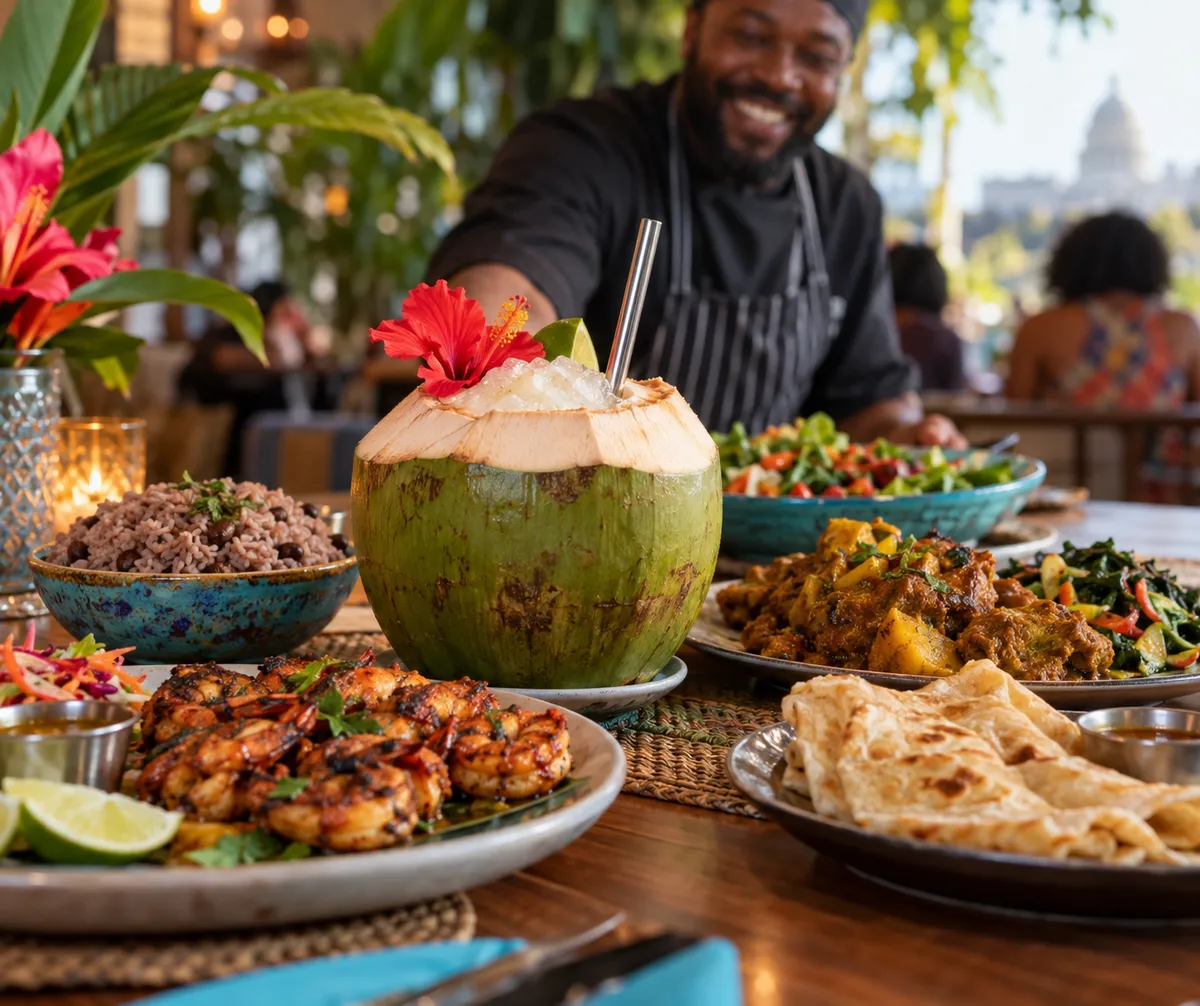
Washington, D.C. has a reputation for power lunches and tasting menus built for lobbyists, but Forbes has turned its attention to a different kind of D.C. dining: Caribbean food. Its new guide, "From Rum To Roti," rounds up restaurants across the capital that bring island flavors to town, covering everything from Trinidadian street food and Jamaican-inspired seafood to upscale Afro-Caribbean cuisine.
That range is the real story here. "Caribbean" is not one cuisine, and the guide, as described, doesn't treat it like one.
The Angle: Caribbean Food Is a Spectrum, Not a Category
Per Forbes, the D.C. options span at least three distinct lanes: Trinidadian street food, Jamaican-inspired seafood, and upscale Afro-Caribbean dining. Those are different traditions, different price points, and probably different kinds of evenings.
It's hard not to read that spread as a sign of where the city's dining scene is heading. The framing around the guide is that Caribbean cuisine keeps gaining mainstream popularity in the U.S., and that D.C.'s growing food scene reflects rising demand for authentic regional flavors and cultural dining experiences. That's the trend line. The practical takeaway is simpler: you can eat your way through several islands without leaving town.
Lane One: Trinidadian Street Food
The title gives away the headline carb. Roti, the flatbread at the center of Trinidadian street food, is the kind of meal that's built for eating with your hands and not overthinking. Forbes puts Trinidadian street food on the D.C. map, and if you're new to the cuisine, this is the friendliest on-ramp: casual, handheld, and made to be shared.
A caveat on what I can tell you: the specific restaurant names and menus sit inside the Forbes piece itself, so check the original for the exact addresses and orders before you go. What the guide establishes is the category, and the category is worth planning a lunch around.
Lane Two: Jamaican-Inspired Seafood
The second lane is seafood with a Jamaican point of view. Forbes describes the offering as "Jamaican-inspired," a phrase that suggests a kitchen taking Jamaican flavors somewhere new instead of reproducing a greatest-hits list. That makes it a good fit for a sit-down dinner when you want something with a bit more room for creativity.
If Trinidadian street food is the quick lunch, this is the evening out.
Lane Three: Upscale Afro-Caribbean
Then there's the dressed-up end of the spectrum. Forbes includes upscale Afro-Caribbean cuisine in the mix, which matters for a simple reason: it shows the cuisine isn't confined to casual counters. In a city where a big night out usually means white tablecloths, having a fine-dining option rooted in Afro-Caribbean cooking is a pleasure and, arguably, overdue.
How to Eat This Guide
If I were turning this into a weekend plan, the guide's structure practically writes the itinerary:
- Start casual. Roti-style street food for lunch gets you oriented.
- Go coastal. Jamaican-inspired seafood for a relaxed dinner.
- Save the splurge. Upscale Afro-Caribbean for the night you want a occasion.
That's my read, not Forbes's prescription, but it's a tidy way to compare the street-food and upscale experiences side by side, which is where the guide gets interesting. You'll taste how much the label "Caribbean" is covering.
Why This Is Worth Your Appetite
Travelers building a D.C. food itinerary tend to default to the obvious. A guide like this gives them, and locals tired of their usual rotation, a reason to look at the map differently. And the rum in the title is a nice reminder that this is a full-table experience, not just a plate.
The smartest thing about the Forbes framing is its refusal to flatten the islands into one flavor. Order the roti, then order the seafood, then book the fancy night. By the end, you'll have learned the one lesson the guide is really teaching: Caribbean food isn't a trend to sample once, it's a whole region's worth of dinners.